
Water Damage Repair vs Full Restoration: Which Does Your Property Need?
This article explains the difference between water damage repair and full water damage restoration, how to tell which option fits a residential property, typical processes, likely timeframes and costs, and practical assessment steps homeowners can use to identify risks and next steps.
What is water damage restoration?
Water damage restoration is the comprehensive process of returning a building and its affected systems to pre-loss condition when simple repairs are insufficient.
- Removes standing water and controls moisture using pumps, extraction, drying equipment, and humidity monitoring.
- Cleans and disinfects affected materials to prevent mold and bacterial growth.
- Repairs structural elements, HVAC components, insulation, and electrical systems as required.
- Replaces non-salvageable building materials (drywall, flooring, cabinetry) and restores finishes.
- Documents conditions for insurance and confirms environmental safety before re-occupancy.
Restoration addresses the full range of damage and secondary risks (mold, structural weakening, air quality). It typically requires coordinated trades, moisture testing, and layered remediation steps rather than isolated fixes.
How restoration differs from simple repair
Restoration covers systemic issues and long-term safety; repair corrects discrete, localized damage.
- Repair usually fixes one element (patching drywall, replacing a section of flooring, repairing a pipe).
- Restoration evaluates and treats hidden moisture, structural integrity, and health risks.
- Restoration often involves drying, decontamination, and multiple trade scopes; repair may be a single-trade job.
- Restoration commonly produces documentation suited for insurance claims; repairs may not.
- Repairs can be a short intervention; restoration is a phased project with verification steps.
Choosing restoration versus repair depends on the extent of water intrusion, contamination level, and presence of structural or HVAC impacts.
When a simple water damage repair is sufficient
A repair is sufficient when damage is limited, materials are dryable, and there are no contamination or structural concerns.
- Damage confined to a small area (for example, a single baseboard or small patch of drywall).
- The water source is clean (e.g., a supply line) and stopped immediately.
- No saturation of insulation, subfloor, or framing.
- No visible mold growth or persistent odors.
- Moisture measurements return to normal after targeted drying.
If these conditions hold, focused repairs and verification drying can restore function and appearance with minimal intervention. Confirming moisture levels with a meter helps ensure the problem won’t recur.
When full restoration is necessary
Full restoration is necessary when water affects multiple systems, contamination exists, or hidden moisture threatens structural or health outcomes.
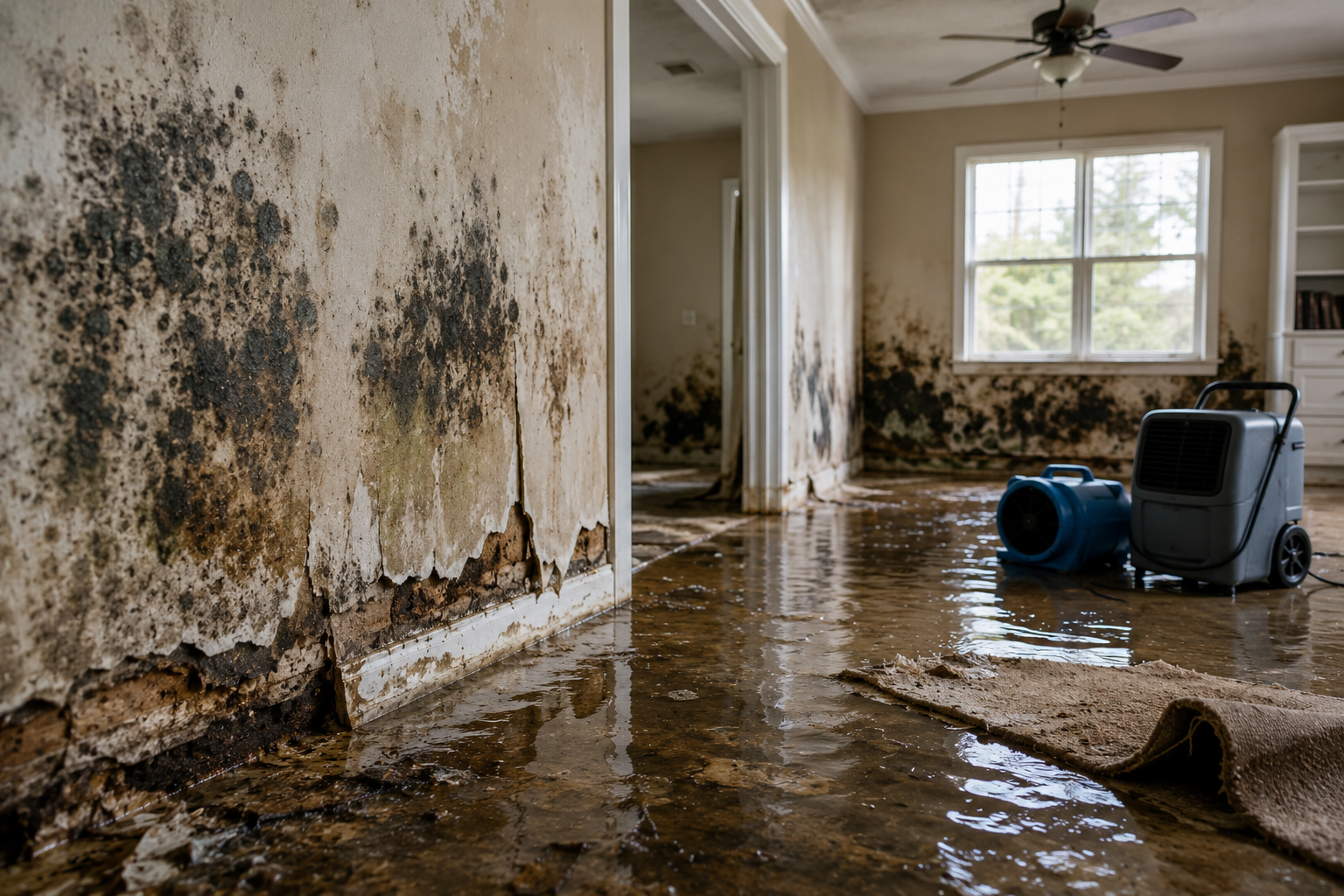
- Extensive saturation across floors, walls, ceilings, or between structural layers.
- Contaminated water (sewage, floodwater, or unknown sources) or prolonged standing water.
- Evidence of mold, persistent odors, or visible degradation of structural members.
- HVAC, electrical, insulation, or load-bearing elements are compromised.
- Multiple rooms or levels are affected, or initial drying attempts have failed.
Restoration restores safety and habitability; it includes demolition of irreparably damaged materials, thorough drying, sanitation, and reconstruction when needed.
Typical process comparison: repair vs restoration
The processes overlap on immediate mitigation but differ in scope, verification and follow-through.
- Initial response: both stop the source and remove standing water.
- Assessment: repair uses a limited visual check; restoration performs moisture mapping and containment planning.
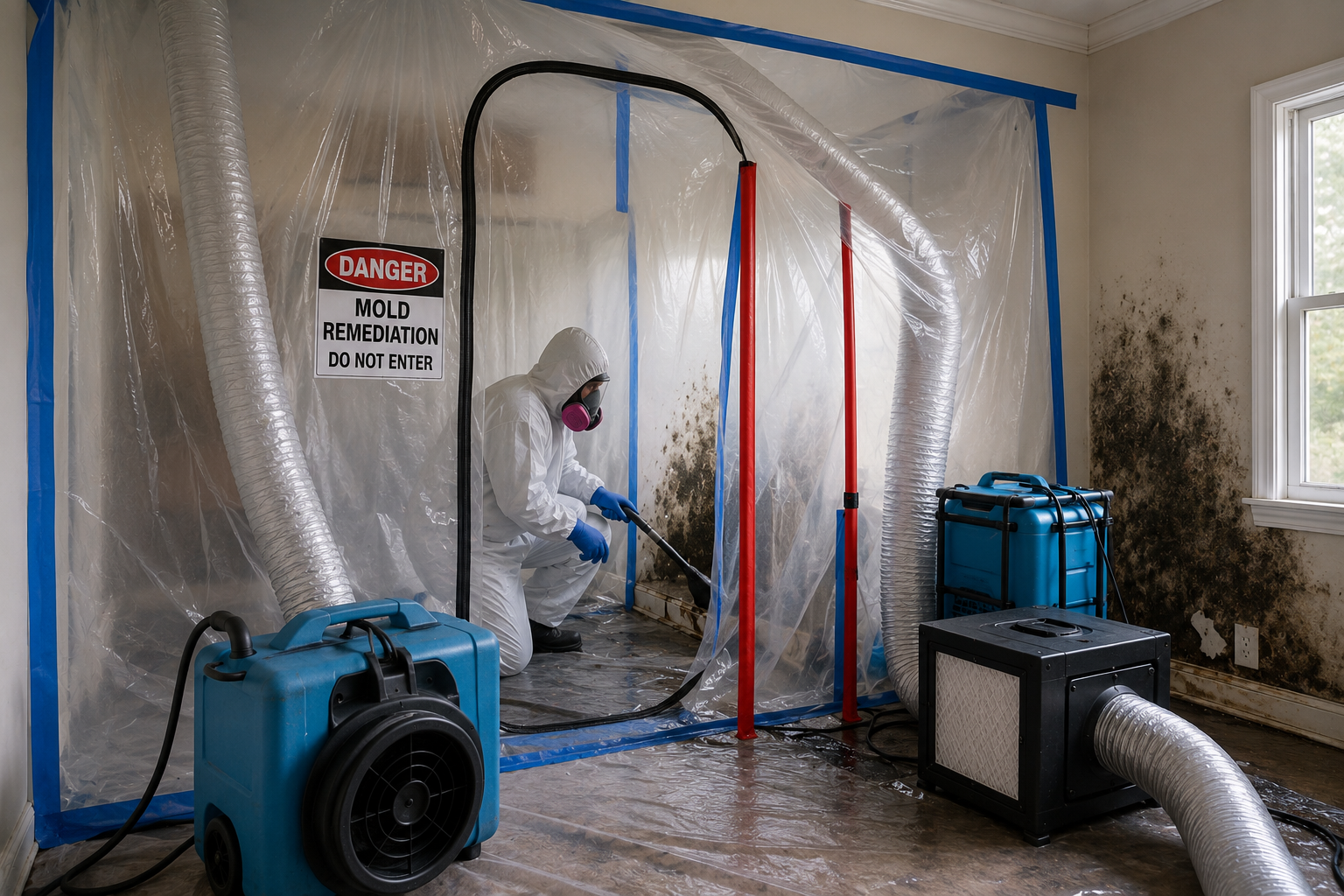
- Drying: repair may use portable fans; restoration uses industrial dehumidifiers, moisture probes, and documented drying goals.
- Cleaning: repair addresses visible dirt; restoration performs disinfection, odor control, and air quality checks when required.
- Repair/rebuild: repair replaces or patches local finishes; restoration coordinates reconstruction and system testing.
- Verification: repair may not include formal verification; restoration records moisture readings and final inspections.
Documented verification and multi-trade coordination distinguish restoration projects from isolated repairs.
Costs, timelines, and risk factors
Costs and timelines vary by scope, contamination level, and local labor rates; risk factors can extend both.
- Small repair: typically hours to days and lower material/labor cost.
- Restoration: often days to weeks, depending on demolition, drying, and reconstruction needs.
- Contamination (category 2–3 water) increases cost due to disposal, PPE, and sanitation requirements.
- Hidden damage or delayed mitigation raises costs by creating mold or structural decay.
- Insurance coverage, permitting, and access to trades affect both timeline and expense.
Estimate conservatively: limited repairs are inexpensive and quick; once structural remediation or contaminated material removal is required, expect higher costs, staged scheduling, and verification steps.
How to assess what your property needs
Assess using clear, measurable steps rather than aesthetic judgment alone.
- Stop the water source and ensure safety (power off if water contacts electrical systems).
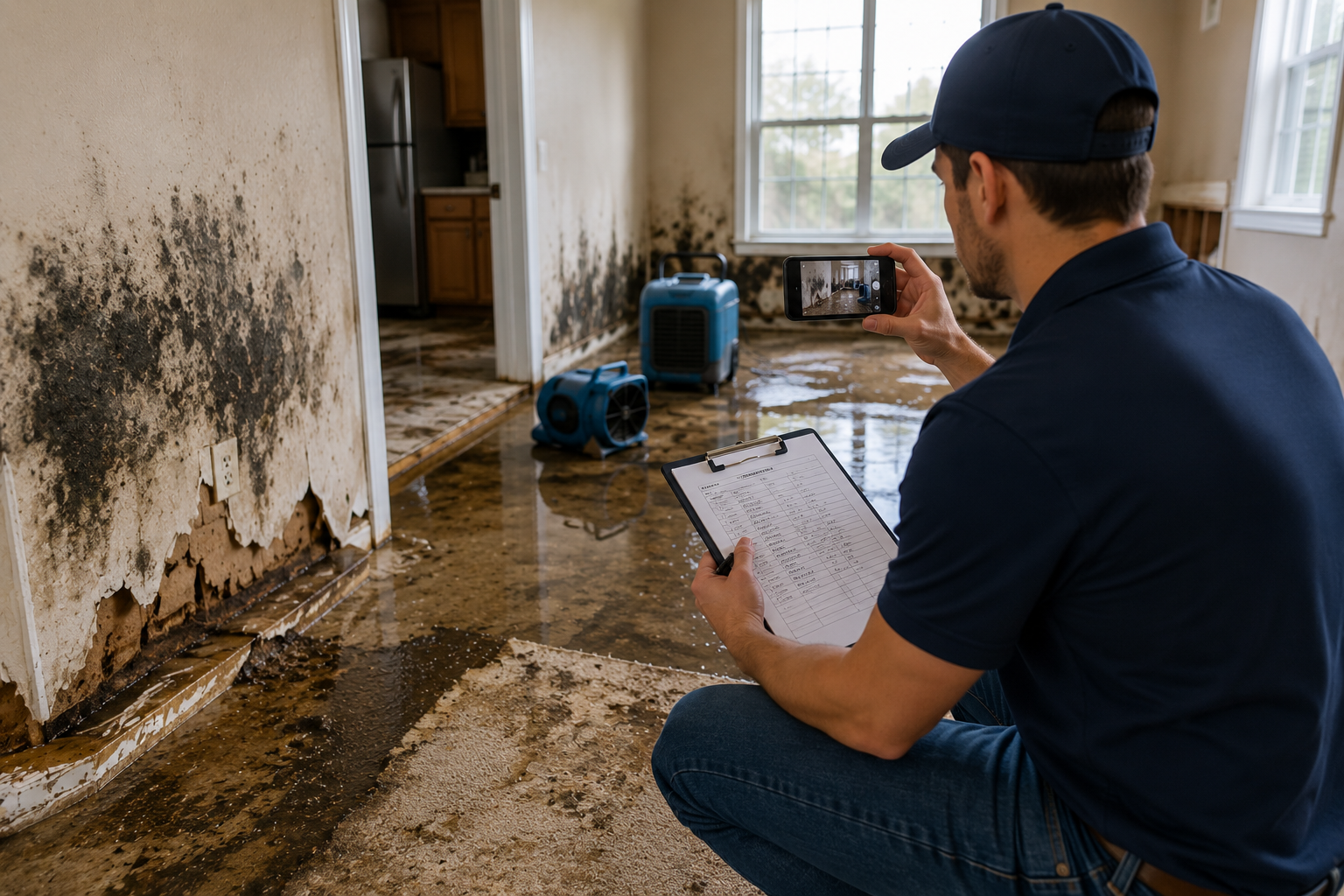
- Document damage with photos and note timeframes and visible sources.
- Check for standing water, saturation of multiple materials, odors, or visible mold.
- Use moisture meters or thermal imaging (professionals) to detect hidden dampness.
- If contamination, structural concern, or more than one room is affected, treat as restoration-level work.
- When unsure, obtain a written inspection and documented moisture readings from a qualified firm (for example, Jb Water Damage Restoration) to determine the scope.
A measured assessment reduces the chance of underestimating hidden damage and informs whether targeted repairs or a full restoration plan are required.
Preventive steps and short-term actions homeowners can take
Immediate, measured actions can limit scope and reduce the need for full restoration.
- Shut off the water source and electrical power to affected areas when safe.
- Remove pets, people, and belongings from affected spaces; move undamaged items to dry areas.
- Extract standing water with pumps or wet vacuums if safe to do so.
- Increase air circulation and ventilation where possible, using fans and open windows.
- Document damage and contact a qualified professional for moisture testing and guidance.
- Avoid DIY demolition when contamination is possible; improper handling increases health and structural risk.
Prompt, correct initial actions reduce secondary damage such as mold or structural failure and improve recovery outcomes.
Water damage repair: common scenarios and limitations
Water damage repair addresses localized failures but has limitations when damage is systemic.
- Typical repair scenarios: isolated pipe leak, a single appliance overflow, and a small ceiling drip.
- Repair actions: localized replacement of drywall, trim, floorboards, or repair of the failed component.
- Limitations: repairs do not address hidden moisture, contaminated water, or structural compromise.
- Risk of under-treatment: incomplete drying can produce mold within weeks and necessitate later restoration.
- When to escalate: if moisture readings remain elevated after a repair, or if contamination or multiple materials were exposed.
A repair is appropriate for contained, clean-water incidents; escalate to restoration if testing or inspection reveals a broader impact.
Frequently Asked Questions
Q: What is the main difference between repair and restoration?
A: Repair fixes localized damage; restoration is a comprehensive process addressing moisture, contamination, structural safety, and reconstruction.
Q: How quickly should drying begin after water intrusion?
A: Drying should begin as soon as the source is stopped—ideally within 24–48 hours—to limit secondary damage and mold growth.
Q: Can I handle a repair myself?
A: Homeowners can perform minor repairs for clean water, localized damage, but moisture testing and contamination concerns require professional assessment.
Q: When is water considered contaminated?
A: Water contaminated by sewage, floodwater, or unknown sources is considered contaminated and requires remediation measures beyond simple repair.
Final Thought
Selecting repair or full restoration depends on objective indicators: extent of saturation, contamination, and structural impact. Use documented assessments and moisture measurements to decide; when in doubt, treat the situation conservatively to avoid hidden damage and health risks.
You might also like